


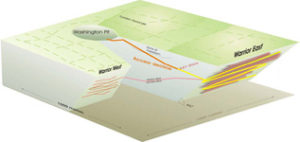
 The goldfield at Charters Towers covers a large area where we will be restarting this world class goldmine and therefore is being developed through accessing the ore bodies in several areas and interconnecting the mines where possible. There is a common management and equipment infrastructure that is available to the mines.
The next commercial gold production area is the "Central" mine.
Citigold has substantial development works in the Central mine area including a 238 metre deep production size access tunnel, two ventilation shafts, power, workshops, etc. This mine is planned to resume going deeper and commence commercial gold production.
Citigold is self-sufficient in water due to recycling. The Company dewaters the Central mines from its submersible pump located into the historic mine workings and the water is recycled into the gold extraction plant. The water is good quality meeting stock quality drinking water standards with a neutral pH 7. Drainage into the mine workings from rainwater averages a modest 10 litres a second. The water level has generally been maintained about 100 metres below the surface for 20 years.
Mining Method
Mining operations at Charters Towers are by underground mining methods. The gold deposits are hosted in very strong granodiorite rock that is stronger than commercial grade concrete. This makes for good mechanised mining conditions.
Mining method is modern drill and blast technique. The blast-hole drilling work is carried out by machines with single or dual drilling booms depending on the size of the work area. They drill holes that are loaded with specially formulated high impact explosives to break the rock. The broken rock is moved by front end loading machines (Load-Haul-Dump units or LHD's) that move about 5 tonnes of rock each bite. The rock is loaded into 20 tonne capacity trucks and hauled to the surface.
Separate sacrificial tunnels are then excavated through the gold ore body at different levels. Holes are then drilled up between the levels for blasting to break the gold bearing rock ready for excavation and haulage to the surface. The underground tunnel system is complex and requires careful design and engineering based on the geological mine design setting out where the valuable ore is located.
The technical mining method is mechanised (long-hole open stoping on 15 metre sub-levels, trackless haulage) which assists low-cost operations. Total operating costs target under A$600 per ounce at full production. The current gold sales revenue would be strong at an Australian gold price around A$2,400 per ounce.
Gold bearing ore is hauled to the surface and then to the planned gold extraction plant by road trains on the approved local public heavy haulage road route.
The Future
Increase in Planned Gold Production